Key points
- A nerve root injection places local anaesthetic and steroid next to an irritated spinal nerve.
- It is usually a day-case procedure using X-ray guidance and takes around 20–30 minutes.
- It can reduce leg or arm pain and help confirm which nerve is causing symptoms.
- The benefit varies from person to person, and the effect may be temporary.
What is a nerve root injection?
Spinal nerves leave the spine through small openings between the vertebrae, called foramina. When a nerve root is squashed or inflamed, for example by a disc prolapse or narrowing of the spine, it can cause pain, numbness or tingling that travels down a leg or arm.
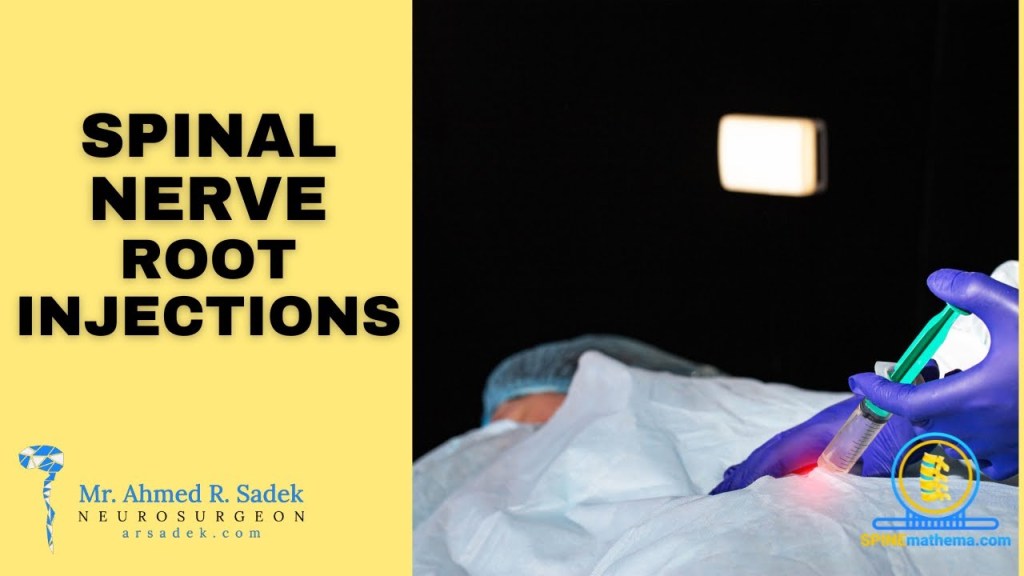
A nerve root injection (sometimes called a transforaminal epidural or selective nerve root block) delivers medication right next to the nerve root at the point where it leaves the spine. The injection contains:
- Local anaesthetic, which numbs the nerve and usually wears off within a few hours
- Steroid, a powerful anti-inflammatory that reduces swelling around the nerve. It usually starts to work within a few days, but can take up to two weeks
Who might it help?
Injections are most often used for sciatica or arm pain caused by a disc prolapse or narrowing around a nerve, when pain is not settling with simple measures such as pain relief, activity and physiotherapy.
A nerve root injection can serve two purposes:
- Treatment: calming an irritated nerve to reduce pain, giving the body time to heal and making it easier to stay active and do physiotherapy
- Diagnosis: if numbing a particular nerve relieves your usual pain, this helps confirm that nerve is responsible. This can be useful when planning surgery
An injection does not remove the underlying cause, such as a disc prolapse. For many people, though, it reduces pain enough for natural recovery to take place.
Before the procedure
Please let your team know in advance if you:
- Take blood-thinning medication, such as warfarin, apixaban, rivaroxaban or clopidogrel, as these may need to be paused
- Have diabetes, because steroids can raise blood sugar for a few days
- Are or may be pregnant, as X-rays are used
- Have any allergies, including to local anaesthetic, iodine or contrast dye
- Feel unwell or have an infection, as the injection may need to be postponed
You can usually eat and drink normally beforehand unless you are told otherwise. Please arrange for someone to drive you home afterwards, as your leg may feel numb or weak for a few hours.
On the day
- You will be asked to confirm your details and sign a consent form, and you can ask any questions.
- You lie on your front on an X-ray table.
- The skin is cleaned and numbed with local anaesthetic.
- Using X-ray guidance, a fine needle is carefully positioned next to the nerve. A small amount of contrast dye confirms the needle is in the right place.
- The medication is injected slowly. You may briefly feel your usual pain or a sense of pressure. This is normal and helps confirm the right nerve is being treated.
- A small plaster is placed over the injection site, and you rest for a short while before going home.
The procedure itself usually takes around 20–30 minutes. Most people find it more comfortable than they expected.
After the injection
Your leg (or arm, for neck injections) may feel numb or heavy for a few hours while the local anaesthetic wears off. Take care when walking during this time.
Pain can sometimes increase for a day or two before the steroid starts to work. Simple pain relief can help. Gentle activity is encouraged, and most people return to their normal routine within a day or two. Avoid driving for the rest of the day.
It can be helpful to keep a simple pain diary for the following few weeks, noting how your pain changes. This helps your team judge how well the injection has worked and plan the next steps.
How long does it last?
This varies a great deal. Some people get lasting relief, especially if the underlying problem is settling naturally. Others notice an improvement for weeks to months, and some get little benefit. If an injection helps but symptoms return, it can sometimes be repeated, although there is usually a limit to how many steroid injections are recommended in a year.
Risks and side effects
Nerve root injections are generally safe, but as with any procedure there are some risks:
- Temporary numbness or weakness in the leg or arm
- A short-term increase in pain
- Side effects from the steroid, such as facial flushing, disturbed sleep, mood changes or raised blood sugar for a few days
- Headache
- Changes to your menstrual cycle, which are temporary
- Rarely: infection, bleeding, allergic reaction or nerve injury
Contact your team or seek medical help if you develop:
- A fever, or increasing redness, warmth or swelling at the injection site
- A severe headache, particularly one that is worse when sitting up
- New weakness or numbness that does not wear off after a few hours
- Any problems with bladder or bowel control
This guide is general information and is not a substitute for advice about your own situation. Please speak to your GP or specialist.


Leave a comment